Wednesday, September 17, 2008
The Life of a Fashion Designer
Being a famous fashion designer is hard work. Long hours, everyday, every week. Sometimes I wish I could just say, "Fuck it all." Unfortunatly, I can't. I walked into my office this morning with a huge red note on my desk that read," Fire Jenn today, don't forget!" It was a note I had written myself the previous night. Today was the big day that I had to let Jenn go. It was nothing personal, but she was a shitty ass assistant. The one thing that broke the camel's back was her lack of passion. Fashion inspires me, and I want everyone around me to enjoy what they are doing; Jenn doesn't give a fuck. I called the front desk and asked for her to join me in my office. I refused to beat around the bush, and I told her, she had to go. Her face went blank. I thought she was going to cry, when all of a sudden she knocks everything off of my desk and tells me to go to hell and then stormed off. I did not know what to do, say, or feel. I was furious. I called security and demanded something happen to her. The officer said he was incapable of finding Jenn. Disappointed, I continued with my normal day routine. I got a phone call an hour later, informing me that my mercedes was being tampered with. What a surprise, it was Jenn. Luckly, my car was not touched, and thankfully Jenn is where she belongs, jail. Thank God for karma right?

Monday, September 15, 2008
Top Ten Favorite Handbags


Top Bags include the following brands: Louis Vuitton, Mui Mui, Dolce and Gabanna, Chanel, Balenciga, and Chloe.
Sunday, September 14, 2008
WORK IT- 60's

During 1960s, London was sweeping change throughout the fashion world, creating ideas and images, which still emerge today. At one time, the absolute epicenter of 1960s 'Swinging London' was Carnaby Street. This street has been stripped of all its individuality, with it’s groovy boutiques, quirky stores, and independent traders being replaced by a bland selection of corporate outlets and coffee shops. At the opening of the decade, the market was conquered by Parisian designers of expensive haute couture garments. Yet the form of clothes was soon altered by new ideas rising from the London pop scene. Couture, street style, shopping, and The Peacock Revolution have influenced fashion all over the world. Carnaby Street is where fashion began. “In the 1960s, Carnaby Street was made popular by followers of the Mod style. Many independent fashion boutiques, and designers such as Mary Quant and 'Lord John' were located in and around Carnaby Street as well as various underground music bars such as the 'Roaring Twenties'. With bands such as The Beatles, Small Faces, and Rolling Stones appearing in the area to work, shop, and socialize, it became one of London's coolest destination associated with the Swinging Sixties” (Carnaby Street).
The clothes of French designers like Dior and Balenciaga, symbolized sophisticated elegance and were worn by women in high society. The Carnaby Street in London, has some of the premium branded designer clothes, hip cafes and bars, cosmetic shops and boutiques. Another important Continental influence was Italian design, which from the mid-1950s had inspired a chic, sleek look. Mod in Britain persevered on tailor-made attire, choosing materials and cut for maximum impact. The exclusive attitude of the couture houses seemed dated. Haute couture was forced to emulate popular clothing. Courrèges, Cardin, and Yves Saint Laurent were among those who adapted luminously to these new circumstances. “The boutique clothing store emerged in the 1960s as "the happening" place to shop. They were fun and hip and young people felt more comfortable shopping there. No geography was more famous for swinging boutiques than Carnaby Street and Kings Road in London. Not to be left out of the trend, Paraphernalia opened in 1965 on Madison Avenue in New York” (Sixties Fashion).

The clothes aimed specifically at the young which Mary Quant had been designing since the late 1950s became popular. Boutiques, like Barbara Hulanicki's Biba and Quant's Bazaar provided inexpensively made clothing suited to a busy, urban lifestyle. Instead of purchasing outfits designed for specific occasions, people favored separates. The miniskirt was the most eye-catching article of clothing of the decade, designed for an ideally thin female form. Designers of clothes and textiles demonstrated modernity. Space-age silver was mixed with primary colored prints taken from Pop and Op Art.

Shops have played a vital part in advertising new fashions. Whole areas of London like Carnaby Street, which changed as boutiques. Boutiques sold an inexpensive range of swiftly changing outfits and offered an informal atmosphere and self-service, unlike traditional clothes shops. John Stephen was one of the first to open a boutique selling menswear on Carnaby Street. Meanwhile, Michael Fish recognized Mr. Fish, selling psychedelic-inspired outfits, provocatively close to Savile Row. Terence Conran in his shop habitat took another new approach. Inspired by furniture shops he had seen in Scandinavia, he displayed goods in a little pine interior, stacked in piles as though they were in a warehouse. Conran was successful in marketing well-designed domestic goods, including home furnishings, at relatively low prices.
The most remarkable development in 1960s dress was the dramatic change in menswear. For the past 150 years, clothing for men had been tailor-made and plain in appearance. Following trends which first emerge in gay fashions, colorful elements were introduced, such as the collarless jacket, worn with slim-fitting trousers and boots. During the mid-1960s frills and cravats came back in, together with vividly printed shirts. Clothing became increasingly unisex as men and women shopped at the same boutiques for similar items.


John Stephen released his first shop called "His Clothes" in Beak Street, which was just off Carnaby Street around 1957. In those days, Carnaby Street was nowhere close to fashion centre. An electricity substation occupied one side of the street. John Stephen moved "His Clothes" to Carnaby Street in the late fifties, after a fire at his original shop. Interest in Stephen's clothes spread like wild fire. Soon, there was a chain of shops all over London. Carnaby Street is an impacting street in the fashion industry history and will continue to be until the end of time.

Remembering 9/11
On the morning of September 11, 2001, I remember waking up to the TV blasting at 6:30 in the morning. I walked in the living room questioning all the noise. The expressions on my parents' faces, when I walked into the living room, indicated shock and fear that I saw embedded in their eyes. I was in 6th grade at the time, I think the entire week of school was spent watching channel 5 news. Watching the planes hit the Twin Towers was almost unreal to me, I had no idea what to think or do. I sat up wondering if such a hate crime would or could happen again, sooner or later. Question marks filled my head and I was scared. I remember sending prayers every night to all the people who lost their lives and to their families and friends. At the time, I was sold on the fact that it was a terrorist attack. But today, with much research has changed my outlook. We are supposed to be the strongest and most inferior country in the world yet we let to unknown people onto an airplane, armed. When those two people who high-jacked the plane only were concerned on how to get up in the plane, and had no regards or interest in knowing how to land, were huge flags...why? Bush played a huge role in the 9/11 act. There are many things that have been asked to Bush, and for some reason he cannot answer them. Why? What is he trying to hide?
.bmp)
Bless all the families who lost loved ones on this tragic day.
You will never be forgotten.
Monday, September 8, 2008
About me: and the 7 things that are false about fashion

My name is Michel Kerkes and I live in El Segundo, California. I was born and raised in the city of Manhattan Beach for thirteen years of my young life. From the age that I was four, I had been intrigued with the idea of fashion. Whether is was dressing up in my mothers clothing or steeling my big sisters' shirts, even at a
young age I always wanted to be up with the latest trends. Not only do I love the style and creativity of a fashion designer but the thrill of clothes is what attracts me to blogging. I enjoy attending fashion in L.A. shows at different places and colleges, such as FIDM. I channel my fashion icons, such as Kate Moss, Sienna Miller, Mary-Kate Olsen, and Nicole Richie, just to name a few. Below you will learn the seven mistakes people think about fashion that everyone should know: Using seven celebrities or style.
Step 1: Kate Moss
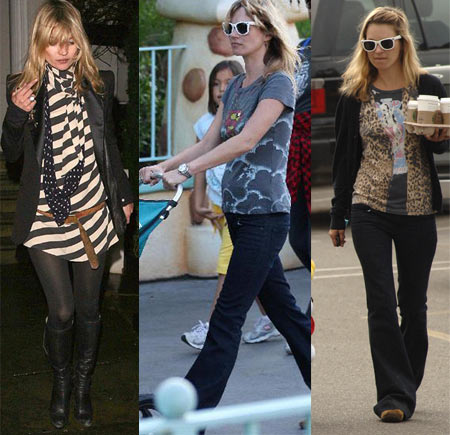 Most people today believe that the only way to be "in fashion" is to buy expensive clothing and spend thousands of dollars on designer hand bags. This statement is untrue. Take Kate Moss for example , everything that this famous supermodel puts on ends up on the runways of fashion's top designers, on the cover of the hottest magazines, and in the closets of millions. And what does Kate Moss wear? Vintage clothing, baggy trousers, and urban styled clothing which can call be found in little vintage shops all over L.A. Buffalo Exchange offers designer items for cheap and even offer a promotion on how you can sell them your own clothes for money or in exchange for something you like there.
Step 1: Kate Moss
Most people today believe that the only way to be "in fashion" is to buy expensive clothing and spend thousands of dollars on designer hand bags. This statement is untrue. Take Kate Moss for example , everything that this famous supermodel puts on ends up on the runways of fashion's top designers, on the cover of the hottest magazines, and in the closets of millions. And what does Kate Moss wear? Vintage clothing, baggy trousers, and urban styled clothing which can call be found in little vintage shops all over L.A. Buffalo Exchange offers designer items for cheap and even offer a promotion on how you can sell them your own clothes for money or in exchange for something you like there.2. Sienna Miller: False Fact Number Two: If people are wearing it, it's in style.
Sienna Miller exemplifies originality and uniqueness to the fashion world. If everyone is wearing the same thing, someone had to have started the trend. Sienna Miller is your key icon in strange styles such as gladiators (pictured below), that make headlines immediately.
 Critics used to frown upon gladiator sandals because well, they were worn by gladiators. Once seen on Sienna Miller, every girl on earth fought for a pair.
Who knew that old shoes, your boyfriend's top, and a vintage hat could be so cute!
3. Mary-Kate Olsen: False Fact Number Three: Layering is never in style.
Mary-Kate Olsen has spent years layering baggy clothes on her little body, making the "bum" look quit fashionable. There are some exceptions, but if you keep the idea of Mary-Kate, you will be on your way to greatness.

4. Nicole Richie: False Fact Number Four: Big sunglasses make you look like a bug.
Nicole Richie definitely has had her fair share of "bug-eyed" glasses but if you look at the teens all over LA, they all mask their faces with huge shades to hide from the sun. On the contrary, Nicole Richie brings the "chic" look of the sunglasses, as she models them all over Los Angeles. Even Lindsay Lohan, Paris Hilton, and many more advertise these stylish shades.


5. Lindsay Lohan: False Fact Number five: Always match.
Mixing up different styles, colors, and patters can really spice up your wardrobe. Matching is so blah these days, just look at Lindsay Lohan. You normally wouldn't look twice at a pair of blue shoes when your wearing a red dress, but look how fierce Lindsay looks in her mismatch attire.

6. Paris Hilton. False Fact Number Two: Sweats are not in style.
Yeah, sweats are made for laying around and working out, but why not make the comfy clothes fashionable? Paris Hitlon is definitely the heiress of making a pair of sweat pants a fashion statement.
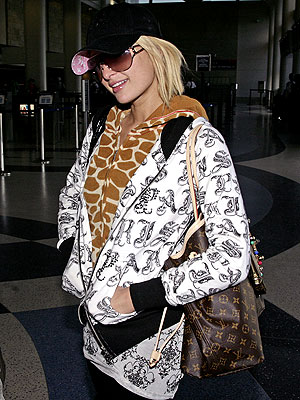
Sweats are hot!

But please refrain from dressing like this...

The only fashion statement Brittney Spears is making is a cry for help. Please burn after wearing...Make sure your clothing fits people!
7. False Fact Number Seven: UGGS are UGly
When it's cold out, UGGS are one of the most comfortable shoes to wear. Not only can you wear them when it rains, but they also look very chic with a cute pea coat. All celebrities wear UGGS, and yes, they look good! Snow boots aren't only for the snow, they are a fashion statement.


Those were the Seven False Facts about fashion. Want to be a fashionista? Check out this style!

<3
Subscribe to:
Posts (Atom)
